Peel-and-Stick vs. Professional Vinyl: An Honest Comparison
August 11, 2026 · All About Floors NW
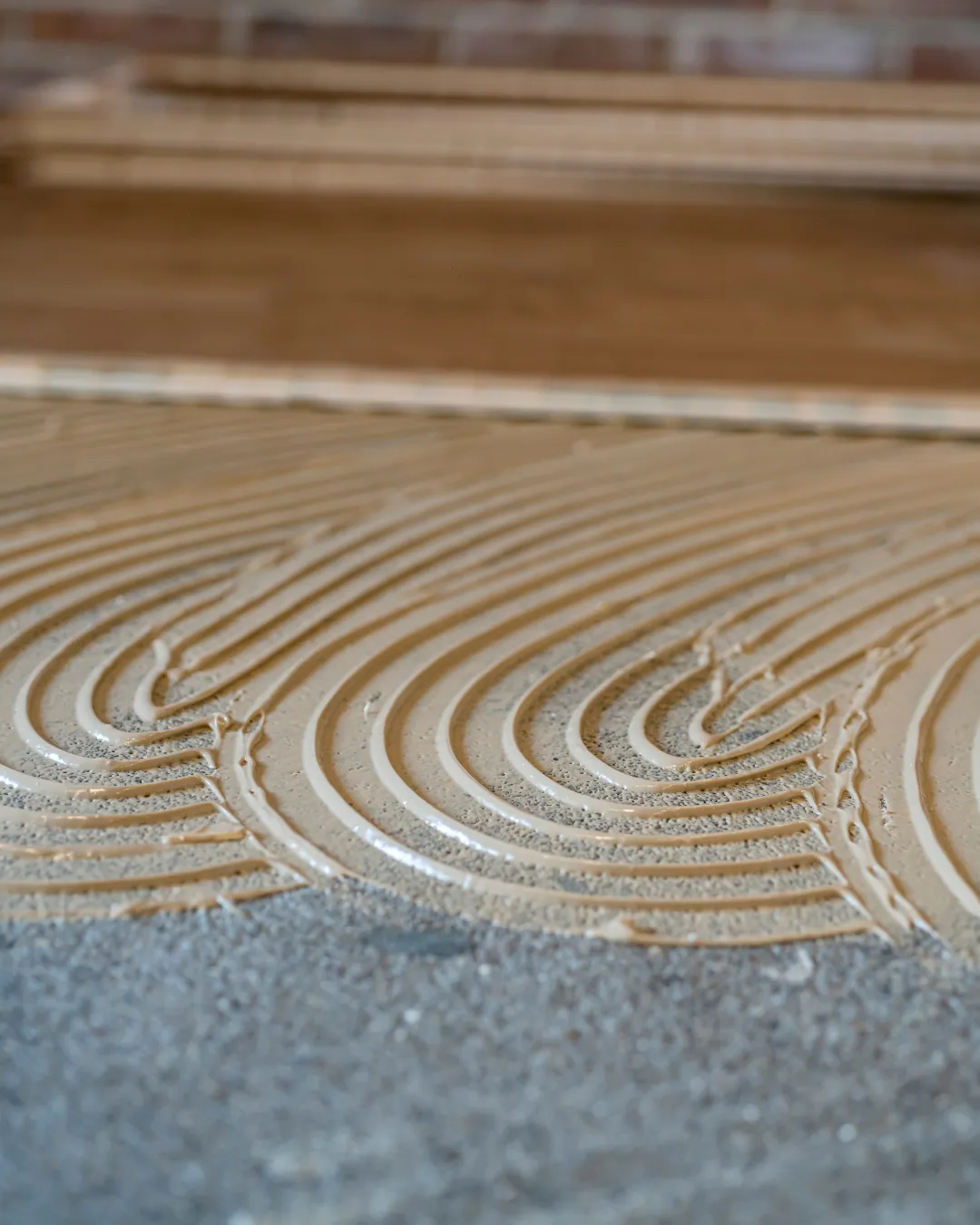
Peel-and-stick vinyl gets dismissed by a lot of flooring people, and that is not quite fair. It has a genuine place. It also gets used in rooms where it will fail, usually because the price looked irresistible.
Here is the honest version of where each option belongs.
What peel-and-stick actually is
Thin vinyl tiles or planks with adhesive already on the back. You clean the subfloor, peel the backing, press them down. No tools beyond a knife and a straight edge.
The appeal is obvious: it is the cheapest flooring you can buy, and a competent homeowner can do a small room in a weekend.
Where it genuinely works
We would not talk anyone out of peel-and-stick in these situations:
- A laundry or utility room. Small, low traffic, and if a tile fails in three years you lift it and put another one down.
- A rental between tenants. Cheap, fast, and replaceable when the next tenant leaves.
- A room you know you will redo properly. If the real project is two years away and the current floor is unbearable, this bridges the gap for very little money.
- A closet or pantry. Nobody is standing there for hours and nothing heavy is rolling across it.
In all four cases it is a sensible decision, not a compromise.
Where it costs more than it saves
Kitchens. This is the room people most often try it in and the room where it most often fails. Kitchens have water, they have heat, they have appliances that get dragged in and out, and they have someone standing at the sink in the same spot every day. Every one of those attacks an adhesive bond.
Main living areas. Traffic volume alone will find the weak points, and a lifting seam in the middle of a living room is not something you can ignore.
Anywhere with underfloor heating. Warmth softens adhesive. This is a straightforward incompatibility.
Over anything textured. Peel-and-stick is thin and flexible, so it takes the shape of whatever is underneath. Existing grout lines show through. So do trowel marks, seams and dips. Whatever the subfloor looks like, your new floor will look like that with a pattern printed on it.
The subfloor is the whole game
With every vinyl product the subfloor matters, but with peel-and-stick it is the entire system, because adhesive is doing all the work.
It has to be clean — genuinely clean, not swept. It has to be dry, which in this climate is worth actually checking rather than assuming, particularly on a concrete slab or in a basement. And it has to be smooth.
This is where most DIY installations go wrong. The tiles go down over a floor that looked fine, and six months later the edges are lifting because there was residue, or moisture, or a texture the adhesive could not grip.
What professional vinyl gives you instead
Two things, mostly: a thicker product and a proper installation.
Click-lock luxury vinyl floats over the subfloor and locks plank to plank. Because it is not bonded, it tolerates minor subfloor imperfection, and because it is thicker with a real wear layer, it handles traffic in a way a thin tile cannot. It is the product we install most often, and our luxury vinyl tile guide covers the range.
Glue-down vinyl bonds to the subfloor properly, with the right adhesive for the conditions and after the subfloor has been prepared to a standard the product actually needs. It is more stable underfoot and it is what we would specify for a large area or anywhere with rolling loads.
The wear layer is the specification that matters most and the one peel-and-stick cannot compete on. It is the transparent top surface that takes the abuse, and it is why a professional vinyl floor still looks reasonable in year eight.
The moisture point, specifically for here
In the Pacific Northwest, concrete slabs and below-grade rooms pass moisture vapour upward, and the amount varies through the year. A professional installation tests for that and specifies a barrier or an adhesive suited to the reading.
A peel-and-stick installation does not, and moisture arriving from underneath is the failure mode nobody anticipates because there was nothing visibly wrong when it went down.
An honest recommendation
If the room is small, low-stakes and temporary, buy the cheap option and do not feel bad about it.
If it is a kitchen, a main living space, or a floor you want to stop thinking about for a decade, the cheap option is the expensive one. Our vinyl flooring guide covers what to look for, and a free in-home estimate will tell you what the proper version costs in your actual room — which is usually less than people assume before they ask.
Frequently asked questions
- Is peel-and-stick vinyl any good?
- For the right room, yes. In a laundry room, a small utility space, a rental you are refreshing cheaply or a space you plan to redo properly within a few years, it does a real job for very little money. In a kitchen, a main living area or anywhere with underfloor heating or heavy furniture, it will disappoint you.
- Why do peel-and-stick tiles lift at the edges?
- Usually one of three things: the subfloor was not perfectly clean and dry when they went down, the room gets warm enough for the adhesive to soften, or moisture is coming up through the floor from below. The adhesive is the whole system, so anything that compromises it compromises the floor.
- Can peel-and-stick go over existing flooring?
- Over some smooth, sound, well-bonded surfaces it can. It cannot go over anything textured, because every bump telegraphs straight through, and it should not go over anything that is already loose or damp. Grout lines in existing tile will show through within weeks.
- What is the difference between click-lock and glue-down vinyl?
- Click-lock floats over the subfloor and locks plank to plank, which tolerates minor subfloor imperfections and is quicker to install. Glue-down bonds to the subfloor, which is more stable underfoot and better for very large areas and heavy rolling traffic, but demands a flatter, better-prepared subfloor.